
Market Week-Ahead: Inflation, Spending and Factory Output
Inflation, spending, factory output, bank earnings, long yields, energy risk and tokenized-market infrastructure converge in a broad cross-asset test.
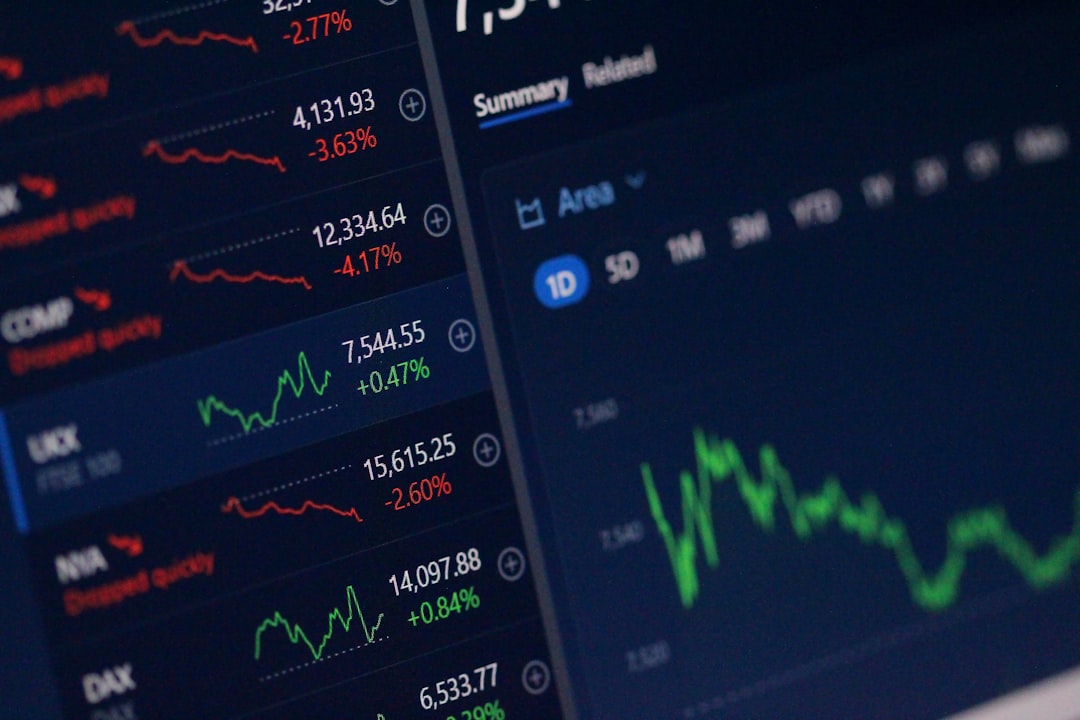
Scenario
U.S. consumer inflation, producer prices, spending and factory output arrive in the same week that large banks begin reporting third-quarter earnings. Elevated longer-term Treasury yields, energy-security uncertainty, and tokenized-equity infrastructure create a wider cross-asset test than any single economic headline. The question is not simply whether nominal growth is positive. It is how price pressure, actual demand, financing conditions and market access fit together.
Evidence: scheduled U.S. releases
Times are Eastern; agency schedules can change. The reports below are scheduled publications, not outcomes as of the article cutoff.
| Date / time | Scheduled publication | Research distinction |
|---|---|---|
| Wed., Oct. 14 · 8:30 a.m. | September CPI and real earnings | Headline versus core prices; nominal versus real wages |
| Wed., Oct. 14 · 2:00 p.m. | Federal Reserve Beige Book | Regional qualitative evidence, not a national statistical estimate |
| Thu., Oct. 15 · 8:30 a.m. | September PPI and advance retail sales | Producer prices versus nominal retail receipts |
| Fri., Oct. 16 · 8:30 a.m. | September import/export price indexes | Imported and exported price pressure |
| Fri., Oct. 16 · 9:15 a.m. | Industrial production and capacity utilization | Real output and utilization rather than spending dollars |
The October 12 U.S. federal holiday shifts certain Federal Reserve daily statistical publications to Tuesday, October 13.
Equities: a strong headline, but not an identical market
Reported facts: At the Friday, October 9 close, the S&P 500 finished at 7,811.54, the Dow at 51,654.95, the Nasdaq Composite at 27,366.17, and the Russell 2000 at 2,806.98. Over October 5–9, those benchmarks changed approximately +1.2%, +0.9%, +0.6%, and -0.9%, respectively. The 10-year Treasury yield was approximately 5.24% on Friday. These are historical Friday observations, not live Sunday prices.
ATLAS4 interpretation: Large-cap index gains should not be mistaken for uniform participation. Small-cap underperformance, long yields and energy exposure test whether investors are willing to extend risk beyond the largest companies. Price dispersion by itself does not establish systemic funding stress.
Scheduled: JPMorganChase and Goldman Sachs report Tuesday, October 13. TSMC’s third-quarter conference call is scheduled for Thursday, October 15 at 2:00 a.m. Eastern.
ATLAS4 interpretation: For banks, compare credit losses, funding and deposit costs, lending trends and client flows rather than earnings per share alone. For semiconductor producers, compare realized sales, utilization, capacity spending and margins with prior guidance rather than treating the AI investment narrative as proof of demand.
Labor and monetary policy: conflicting clocks
Reported facts: The October 2 BLS release recorded a September gain of 29,000 nonfarm payroll jobs and 4.2% unemployment. Earlier payroll months were revised lower by a combined 60,000. On October 7, the Federal Reserve published minutes for its September 15–16 meeting, at which the federal funds target range was raised to 3.75%–4.00%. The next scheduled meeting is October 27–28.
ATLAS4 interpretation: Weak hiring does not erase inflation risk, and elevated energy prices do not prove hiring will rebound. Forecasts should account for competing evidence, vintage revisions and staffing-market observations. Recruiting surveys, placement data and job-posting platforms can add context, but hiring plans must not be presented as completed payroll additions.
Rates, liquidity and energy transmission
Reported context: The October 9 U.S. 10-year yield was about 5.24%. The New York Fed publishes separate short-term rates, including SOFR and the effective federal funds rate, which measure different funding transactions. A rise in longer-term yields should not automatically be labeled a repo-market seizure.
Middle East security developments continue to expose oil shipping, insurance and physical supply routes to disruption. Competing diplomatic or operational claims should remain unverified until independently confirmed.
ATLAS4 interpretation: Monitor physical delivery data and the oil forward curve alongside freight and insurance costs. Transmission to producer prices, consumer spending, bank risk and equity valuation is possible but neither instantaneous nor mechanically certain. Distinguish oil futures price changes from confirmed barrels lost.
Crypto, tokenized equities and the regulatory perimeter
Reported facts: On October 8, Securitize announced tokenized U.S.-equity security entitlements for eligible investors, initially on its registered broker-dealer platform using the Solana blockchain, with settlement in USDC. Other named venues were described as planned rather than currently live under that launch.
On September 17, the SEC granted a temporary, conditional innovation exemption for certain trading in tokenized NMS stocks. Conditions include instrument and volume limits, protections around rights, transparency, audited smart contracts and trading halts that follow the underlying listed stock. That is not unlimited permission to trade every tokenized share around the clock.
Market-data caveat: U.S. spot bitcoin ETF creations and redemptions occur on business days while bitcoin and other digital assets trade continuously. ETF-flow aggregators can differ or revise figures, so ATLAS4 does not treat an unreconciled weekly net-flow total as settled evidence. Cross-check dated records, then examine spot depth, exchange volumes, futures funding, open interest, liquidations and stablecoin settlement conditions before assigning a directional bias.
ATLAS4 interpretation: A token’s existence does not, by itself, prove legal equivalence, continuous trading, executable market depth or settlement finality. Review the holder’s actual entitlement, custody chain, authorized venue, permitted hours, collateral and redemption path. New infrastructure can increase access while leaving secondary-market liquidity thin.
Two conditional scenarios, neither established in advance
Scenario A: CPI or PPI surprise higher while spending or factory output softens. The growth-inflation tradeoff could tighten, especially if energy risk and long yields also rise.
Scenario B: Price pressure eases while underlying sales and output hold up. The balance of inflation and activity risks would look different, especially if longer-term rates and funding spreads respond constructively.
Takeaway
The week’s task is to separate nominal prices from real activity, market-index strength from breadth, bond yields from overnight funding, tokenized ownership from tradable liquidity, and scheduled events from realized outcomes. Verify every input’s timestamp and legal meaning before treating it as research evidence.
Sources and further reading
BLS — 2026 release schedule
Census — retail release schedule
Federal Reserve — October calendar
BLS — September 2026 Employment Situation
Federal Reserve — September 15–16 FOMC minutes
New York Fed — reference-rate definitions
JPMorganChase — earnings calendar
Goldman Sachs — earnings calendar
TSMC — quarterly results calendar
SEC — tokenized NMS stock innovation exemption
SEC — crypto-asset securities-law interpretation
ATLAS4 Systems research is informational and not investment advice or an offer or solicitation to trade securities or digital assets.