
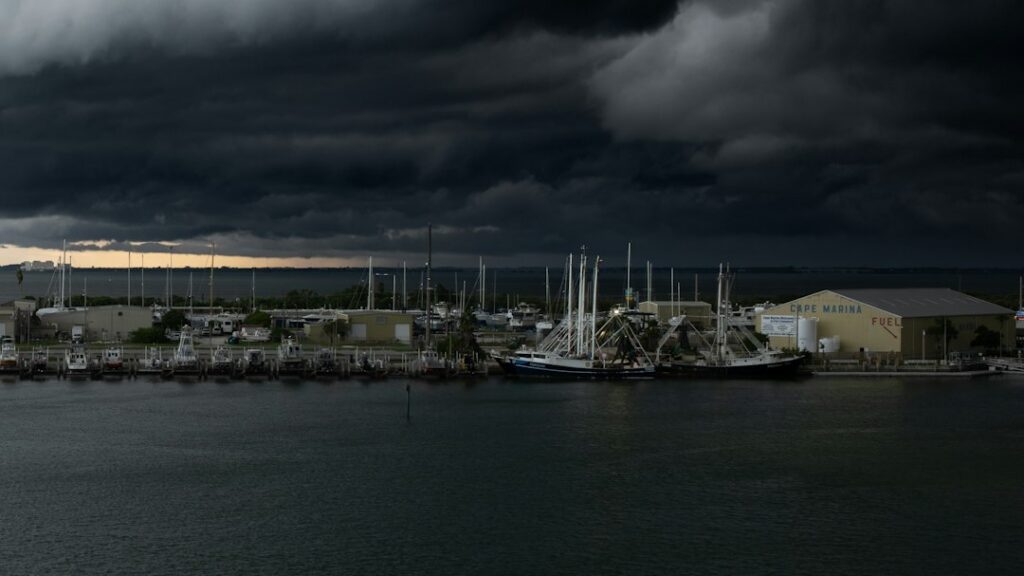
Weather Risk Is Priced—But Not Through One Signal
A new Federal Reserve staff paper asks a sharper question than whether weather risk hurts home values: which representation of that risk actually gets priced?
Using 465,000 Florida home sales over twelve years, the authors compare property-level expected weather losses from catastrophe models, insurance premiums and recent hurricane exposure. All three are associated with lower prices after controls, but their magnitudes differ.
Expected loss carried the strongest signal
The study reports that modeled expected weather losses had the strongest negative association with home prices. The pattern is consistent with buyers capitalizing anticipated future losses into current valuations.
Insurance premiums had a statistically significant but economically more modest relationship. The authors suggest market participants may regard differences in premiums as more transitory than the underlying modeled loss.
Recent events were not the dominant variable
Recent hurricane exposure had only a marginal effect on prices in the study. One interpretation is that Florida hurricane risk is already widely understood, so a realized storm may add less new information about long-run risk than expected-loss estimates do.
That does not mean hurricanes are economically unimportant. It means event recency and structural exposure should not be treated as interchangeable measures.
Why lineage matters
Each variable comes from a different evidence chain. Catastrophe-model loss depends on assumptions about hazards, structures and vulnerability. Premiums also reflect insurer pricing, regulation, coverage terms and market conditions. Recent exposure records an event, not the full distribution of future losses.
Combining those signals without preserving lineage would blur the very differences the study finds. A clean analysis keeps the source, date, model version, geography and transaction context attached to each observation.
ATLAS4 read: association is not a universal price rule
The paper is research, not a Federal Reserve policy position. Its Florida sample and semiparametric methods are informative, but the result should not be exported mechanically to every housing market or asset class. The paper reports associations after controls; it does not make every causal pathway observable.
The practical takeaway is methodological: durable risk may appear in prices before a dramatic event, and the most visible cost is not always the most informative measure. Analysts should preserve competing proxies, credible uncertainty and out-of-sample tests instead of collapsing them into one convenient risk score.