

AI’s First Macro Shock Is Physical
The productivity dividend is still arriving. The power demand, construction bottlenecks, chip prices, and wealth effects are already here.
In a September 28 speech, Federal Reserve Governor Lisa Cook framed artificial intelligence as a general-purpose technology with different economic effects across different horizons. Her near-term assessment is the part markets can easily misread: AI investment may be raising prices before productivity gains are broad enough to relieve them.
A relative-price shock can spread
Cook distinguishes concentrated price increases in AI-related goods from economy-wide inflation. Chips, computers, and software can become more expensive when sector demand hits a steep supply curve. Monetary policy is too blunt to target a narrow relative-price shift, she argues, and supply adjustment may eventually resolve it.
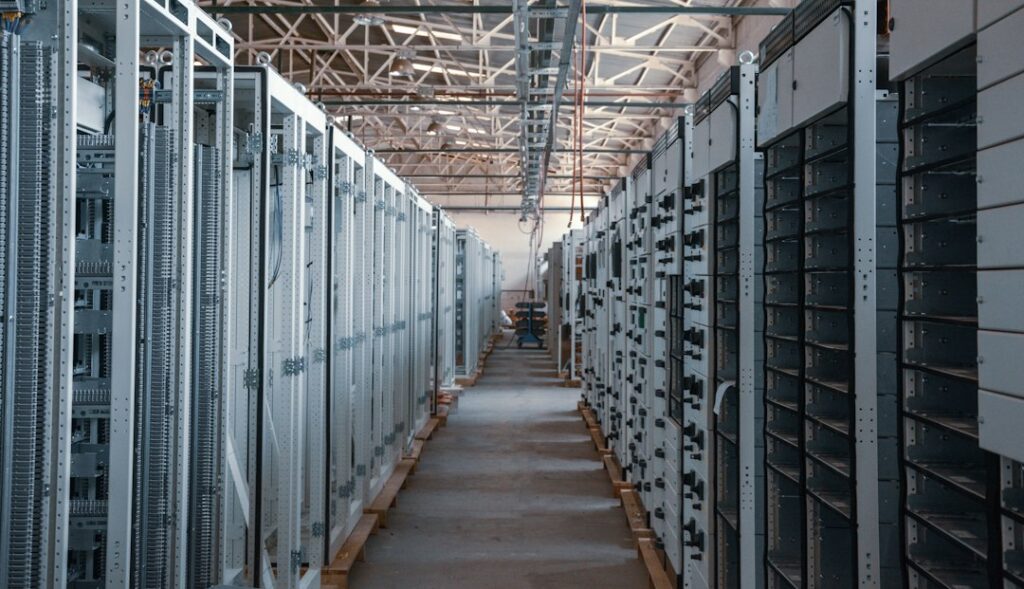
But the buildout also draws on shared inputs. Data centers compete for power, construction capacity, and equipment used elsewhere. Cook cited electricity and water costs each rising around 5 percent over the prior year and core-goods prices running above a 3 percent annual pace so far in 2026, while stressing uncertainty about attribution. The evidence supports a pressure channel, not a single-cause verdict.
Productivity has a timing problem
A productivity boom can increase supply capacity and ease price pressure. Yet it can also lift expected income, asset values, investment, and demand. Cook’s view is that productivity may provide modest disinflation over the next few years, but not soon enough to offset broader pressure later this year.
That sequence matters for markets. Capital spending is observable now; durable productivity diffusion is harder to measure and arrives with variable lags. Treating announced AI investment as if its full output benefit already exists collapses two different clocks.
The labor evidence is still mixed
Cook notes limited evidence of a large change in the overall labor-market structure: unemployment and layoffs remained low and relatively flat as adoption increased. At the same time, some coding and translation roles appear exposed, and recent graduates face a harder entry market that may partly reflect automation of entry-level tasks.
The policy risk is a skills mismatch rather than ordinary demand weakness. Lower interest rates can address broad slack; they are a poor instrument for matching displaced workers to different jobs and could add inflation pressure. That is why aggregate layoffs, occupation-level displacement, new job creation, and wage adaptation must remain separate evidence lanes.
Small firms are the counter-signal
Cook also cited a Federal Reserve small-business survey finding that nearly half of small employer firms use AI and 71 percent of those users report increased productivity. That is self-reported evidence, not economy-wide output measurement, but it complicates the idea that AI gains belong only to the largest firms.
The ATLAS4 read
The conservative view is not “AI is inflationary” or “AI is disinflationary.” It is a sequence: physical demand first, uneven workflow changes next, and a possible broad productivity dividend later. Each stage has different sources, latency, and invalidation conditions.
Watch power and construction costs, chip and equipment prices, small-firm adoption, occupation-level hiring, and measured productivity diffusion. If supply expands faster than AI-driven demand, the inflation channel weakens. If investment broadens without equivalent output gains, the physical bottleneck remains the stronger signal.
Photo: İsmail Enes Ayhan via Unsplash.